
Wool Fabric & Care, Apparel
The Complete Wool Coat Guide: History, Materials, Colors & Care Guide
Jun
Long before wool coats became a wardrobe staple, wool itself was one of the first materials humans ever turned into clothing. That long relationship between people and this fiber is part of why the wool coat still holds the place it does today: not as a trend, but as one of the few outerwear categories that has barely needed to change. This piece looks at what a wool coat actually is, where it came from, why it’s still worn the way it is, what it’s made of, and the full range of colors and cuts it comes in today.
What Is a Wool Coat?
A wool coat is an outer garment, typically falling somewhere between hip and ankle length, woven primarily or entirely from wool fiber rather than cotton, down, or synthetic fill. It sits in a category of its own because the fabric does most of the insulating work on its own, without needing a separate lining of padding to trap heat. That’s also what separates a wool coat from a wool-trimmed jacket or a knit cardigan: the structure and weight of the fabric are built to function as a genuine outer layer in cold weather.
The History of the Wool Coat
Wool has been spun into cloth for an extraordinarily long time. Sheep were among the first animals domesticated for their fleece rather than just for meat, and wool textiles are generally understood to date back roughly ten thousand years, making wool one of humanity’s oldest clothing materials. For most of that history, wool wasn’t shaped into a coat in the modern sense; it was woven into cloaks, capes, and wrapped garments, since tailoring as a craft developed much later.
The wool trade itself shaped entire economies before it shaped fashion. In medieval Europe, and especially in England and Flanders, wool was one of the most valuable exports in existence, important enough that England’s Lord Chancellor still sits on a ceremonial wool-stuffed seat in Parliament as a reminder of how central that trade once was. The fitted, structured coat as a distinct garment really took shape later, through the 17th and 18th centuries, as European tailoring moved away from loose cloaks toward fitted outerwear cut for the body.
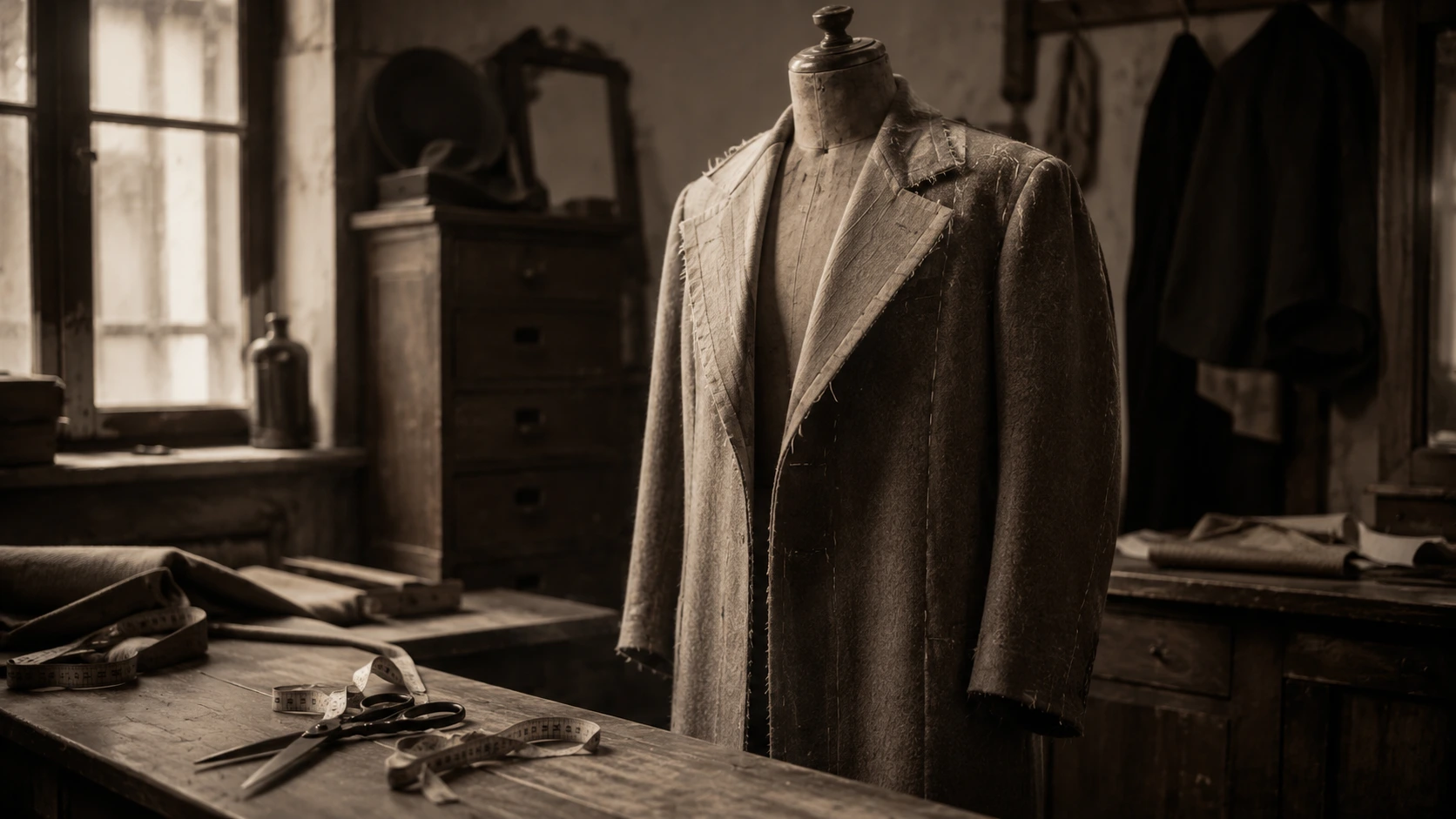
Several of the styles still sold today trace directly back to military and naval uniforms. The pea coat is generally traced to European naval dress from the 18th and 19th centuries, where a short, heavy wool coat with a double row of buttons stood up to wind and salt spray far better than lighter fabric could. The duffle coat has a similar working-class origin, named after the thick wool cloth first milled in the Belgian town of Duffel and later adopted by the British Royal Navy. The trench coat has a slightly different story: the original was designed for British officers in the First World War, but it was made from waterproofed cotton gabardine, not wool. The wool trench coat sold today is really a later civilian adaptation, one that borrowed the trench’s silhouette and belt while swapping in a heavier, warmer fabric better suited to everyday winter wear than to trench warfare.
The overcoat followed a more straightforwardly civilian path, emerging out of 19th-century menswear as formal outerwear worn over a suit, and by the mid-20th century, wool coats had moved fully from utilitarian gear into fashion houses, where structured, tailored silhouettes became a signature of postwar style. That mix of practical origin and tailoring history is a large part of why wool coats still read as classic rather than trend-driven.
Why Is a Wool Coat Worn?
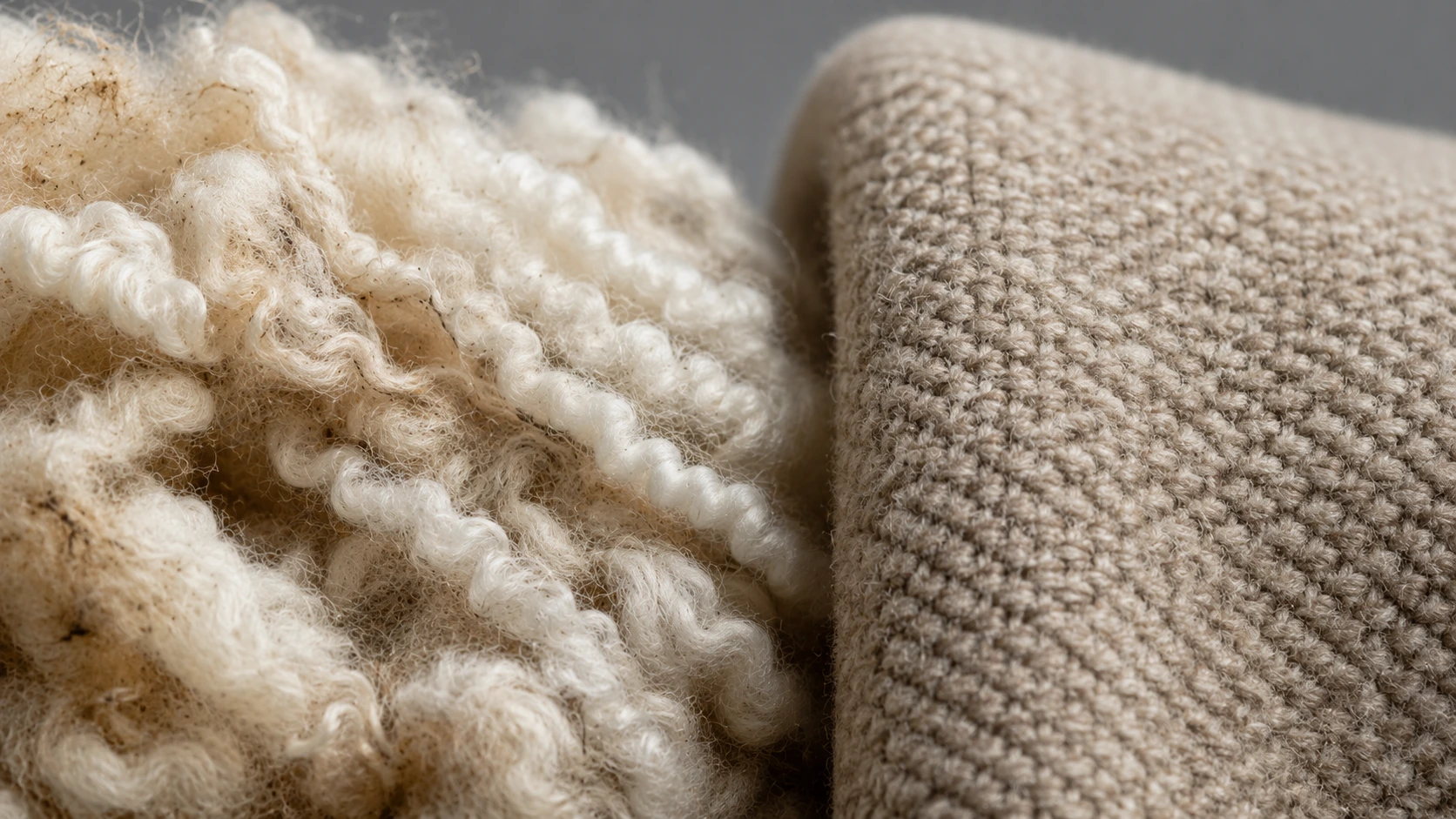
The most obvious reason is warmth, but the mechanism behind that warmth is worth understanding. Wool fiber grows in a natural crimp, and that crimp creates thousands of tiny air pockets that trap body heat, similar in principle to how a down jacket works, just with a sturdier material doing the trapping. Unlike many synthetic insulators, wool also stays breathable, so a long wool coat doesn’t trap moisture and leave the wearer overheated the way some heavily padded jackets can.
There’s also a practical weather advantage that often gets overlooked. Raw wool fiber is coated in lanolin, a natural wax that gives the fabric a degree of water resistance before any treatment is added, which is part of why a wool coat can handle light rain or snow without soaking through immediately. On top of that, wool coats are simply durable. A well-made wool coat resists wrinkling, holds its shape through years of wear, and, unlike a lot of fast-fashion outerwear, is biodegradable rather than shedding microplastics over its lifetime.
Beyond the practical case, there’s a styling reason wool coats stay in heavy rotation: versatility. The same coat that works over a suit for a client meeting works just as well over jeans and a sweater on a weekend, which is rarely true of more casual outerwear. That flexibility, combined with how well wool ages compared to synthetic fabrics, is why a good wool coat is often treated as a long-term investment piece rather than a seasonal purchase.
What Is a Wool Coat Made Of?
Not every wool coat is built from the same fiber, even though they’re all labeled “wool.” Most use sheep’s wool, which itself varies by breed: merino wool is finer and softer, while coarser wools from other breeds are often used in heavier, more rugged coats. A coat described as a cashmere wool coat blends in fiber from cashmere goats, which is finer and lighter than standard sheep’s wool, so a wool and cashmere coat typically feels softer and less bulky for the same level of warmth.
There’s also a meaningful difference between a 100% wool coat and a wool blend coat. A fully wool coat is woven entirely from that fiber, usually meaning better insulation, more natural wrinkle resistance, and a higher price. A wool blend coat mixes in materials like polyester or nylon, which brings the cost down and adds a bit of stretch and easier care, at some cost to warmth and structure. Some heavier styles, particularly classic pea coats, use a dense, felted wool fabric called melton, which is woven and then matted down under heat and pressure until the weave practically disappears, leaving a smooth, wind-resistant surface that’s part of why that style has stayed so functional for so long.
How Many Colors Do Wool Coats Come In?
The color range for wool coats is wide, but it tends to cluster around a few practical categories rather than spanning every shade equally. Neutrals dominate for good reason: a black wool coat or a grey wool coat pairs with almost anything else in a closet, which makes either one a sensible first wool coat to own. Warm neutrals come next, with a camel wool coat, brown wool coat, tan, or beige all reading as classic without being as stark as black.
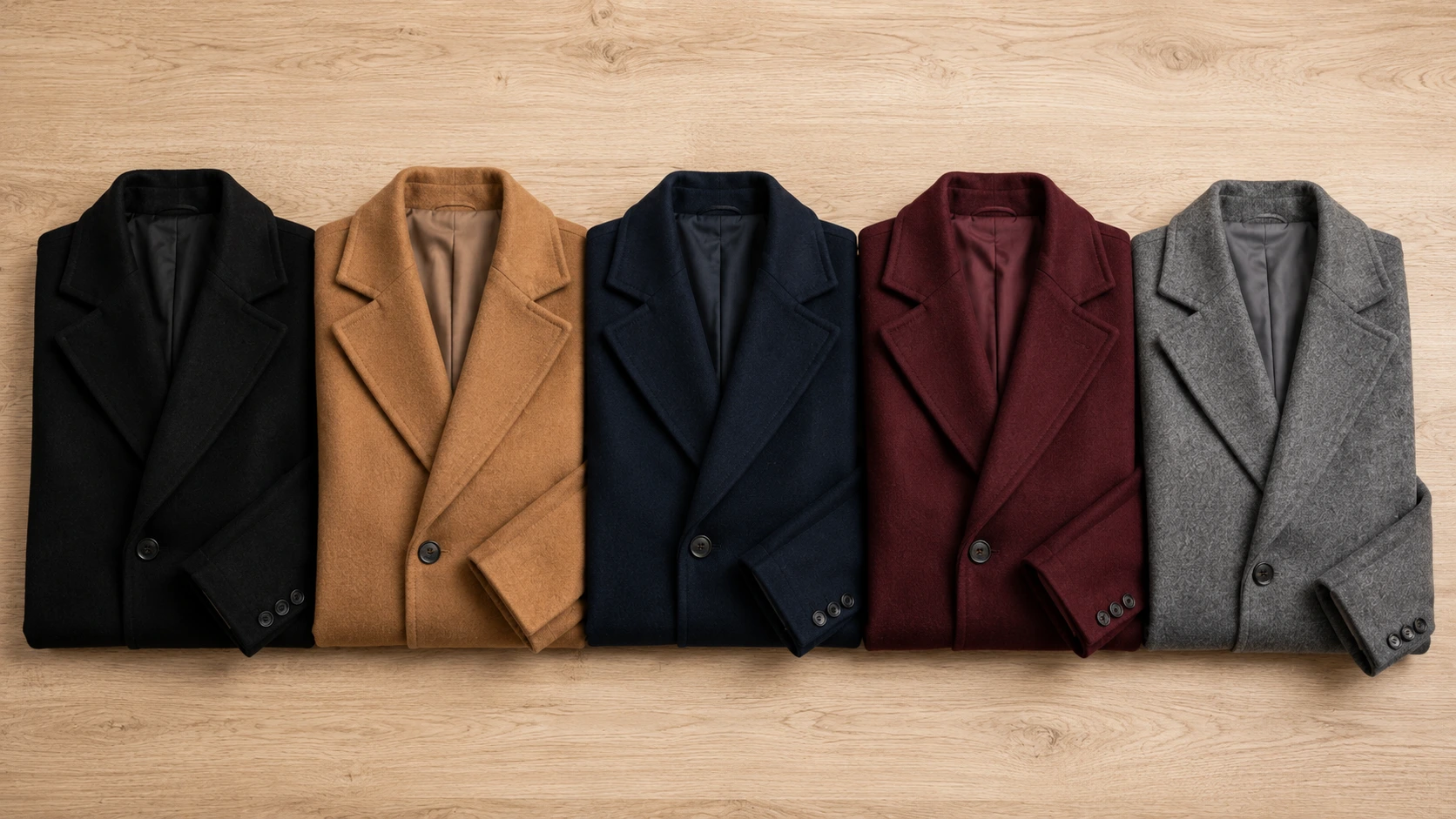
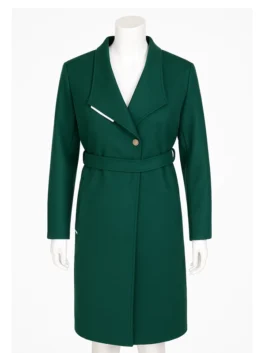
Beyond the neutrals, navy functions almost like an extra neutral, easy to dress up or down. For more personality, a burgundy wool coat, red wool coat, or deep green wool coat adds color without straying from a timeless silhouette, and blue and pink show up in lighter, softer takes on the same idea. Pale shades like cream and white look excellent but show dirt fastest, so they suit a more careful owner better than an everyday commuter coat. A plaid wool coat sits in its own category entirely, usually meant to be the statement piece of an outfit rather than a background neutral.
Wool Coat Styles for Women
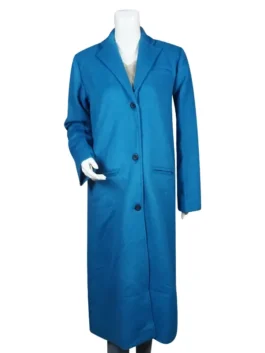
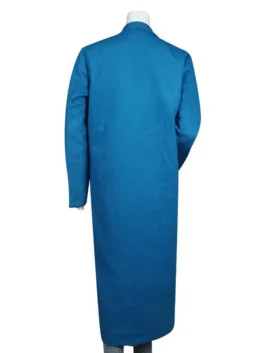
Length does more to change a coat’s character than almost any other detail. A long wool coat, generally falling past the knee, covers more of the body and reads more formal, which is why it remains the best-selling length across most collections. A shorter, hip-length coat trades some of that coverage for easier movement and works better layered over bulky knitwear.
Several silhouettes carry their history into their current shape. A wool trench coat keeps its structured, belted form regardless of fabric weight, and a wool pea coat stays shorter and boxier, with its double row of buttons letting it be worn fully open without losing shape. For something looser, a wrap coat ties shut instead of buttoning, while a cape coat skips sleeves for a more dramatic line.
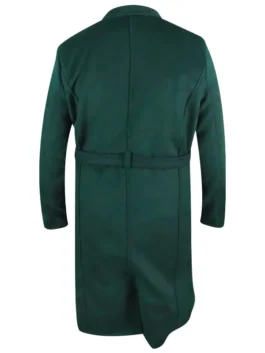
Fit details matter just as much as the base silhouette. A belted wool coat adds waist definition to an otherwise straight cut, and an oversized wool coat has become genuinely popular for how well it layers over thick sweaters. A hooded wool coat solves wool’s one real weakness against weather, and a plus size wool coat is now far easier to find well-tailored than it was even a few years ago, across most of the cuts described above.
Wool Coat Styles for Men
The men’s wool overcoat, falling at or below the knee, remains the default choice because it works as easily over a suit as over jeans and a sweater. A topcoat is its lighter, shorter relative, built more for transitional weather than deep winter.
The men’s wool pea coat follows the same naval-inspired shape as the women’s version, just cut straighter through the body, while a men’s wool trench coat leans more formal with its belted waist and structured shoulders. For something shorter and easier to move in, a car coat, sometimes called a driving coat, typically falls at the hip, which is genuinely useful for anyone spending a lot of time getting in and out of a vehicle.


What Is an A-Line Wool Coat?
An a line wool coat is cut narrow at the shoulders and flares gradually toward the hem, the same basic shape as an A-line skirt. Because it skims rather than clings, it tends to flatter a wider range of body types than a strictly straight-cut coat, and it’s available in both belted and unbelted versions depending on how defined the waist needs to be.
Caring for a Wool Coat
Most everyday cleaning only needs a soft brush, used in the direction of the fibers, to lift off dust before it sets in. For a small stain, blotting with a cloth dampened in cool water and a touch of mild, wool-safe detergent works better than rubbing, which can push the stain deeper into the fiber. A full wash, whether by hand or in a washing machine, should only happen if the care label specifically allows it, since the agitation and heat of a standard cycle can shrink or felt the fibers in a way that’s difficult to reverse.
Wrinkles tend to release fairly easily from wool because the fiber has natural elasticity. Ten to fifteen minutes hanging in a steamy bathroom is usually enough for light creases, and a handheld garment steamer or a warm iron with a pressing cloth handles deeper ones.
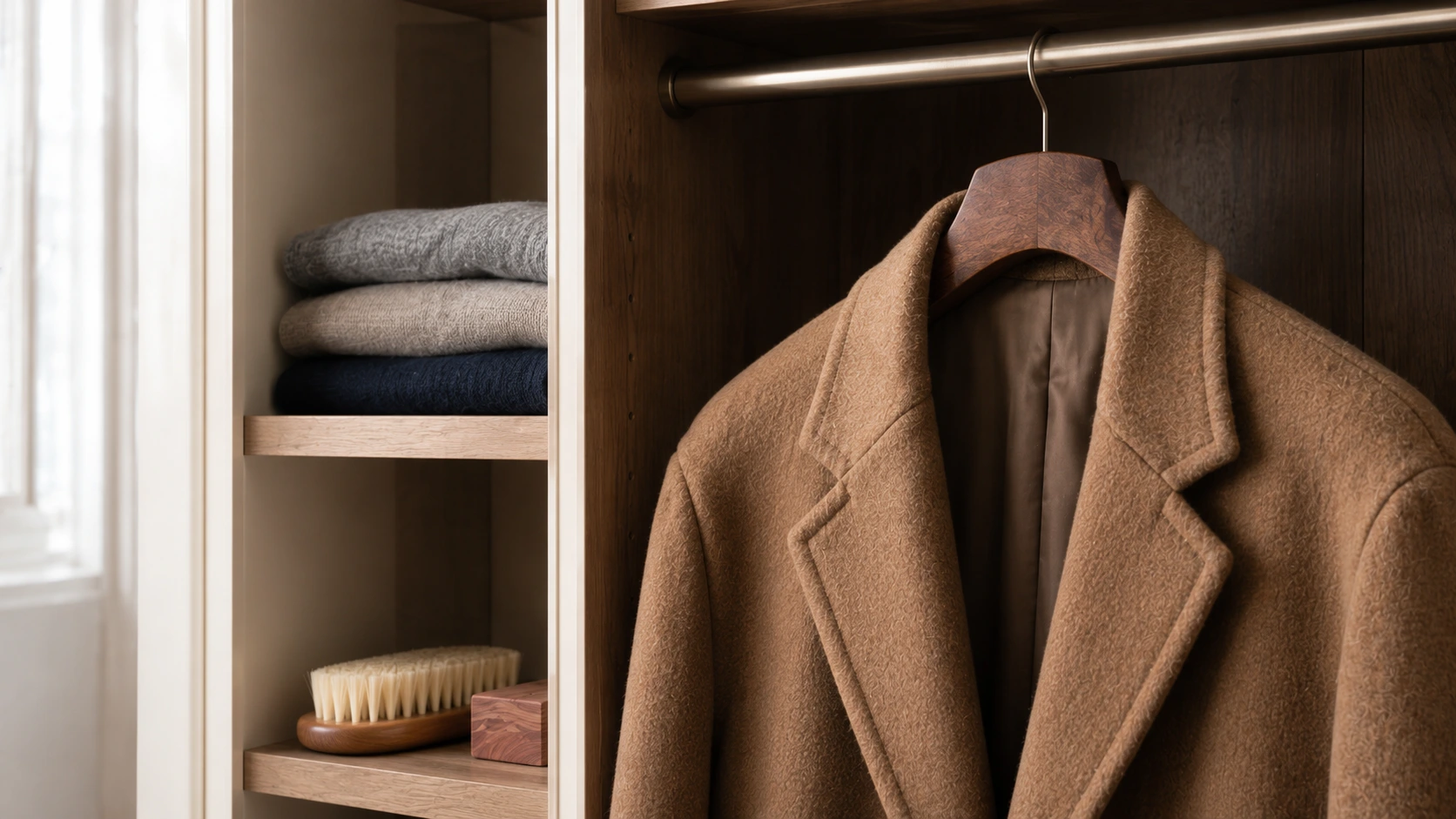
Because of that lanolin coating mentioned earlier, light rain or snow usually beads up rather than soaking straight through a wool coat, though sustained heavy rain will eventually saturate the fibers and leave it heavier and slower to dry. Either way, the right move afterward is to shake off the excess water, hang the coat on a wide hanger away from direct heat, and let it dry fully before wearing it again.
Dry cleaning a standard wool coat typically costs between fifteen and thirty-five dollars depending on the region and the coat’s length, and once or twice a season is usually enough unless it’s visibly soiled, since cleaning more often than that strips the natural oils that help wool resist moisture in the first place. Between wears, a wide hanger keeps the shoulders from developing dents, and for off-season storage, a breathable garment bag with cedar blocks or lavender sachets nearby protects against moths far better than sealed plastic ever does.
Final Thoughts
A wool coat carries a few thousand years of textile history into a single garment, which is part of why it still feels timeless rather than dated. Between the way wool insulates, how long it lasts, and the sheer range of colors and cuts it now comes in, it’s easy to see why this category has outlasted nearly every passing outerwear trend that’s tried to replace it.
Frequently Asked Questions
A wool coat is generally made from sheep's wool, sometimes blended with cashmere or synthetic fibers like polyester for stretch and lower cost. A 100% wool coat uses no blended fibers, while a wool blend coat trades some warmth and structure for affordability and easier care.
Yes. Wool fiber has a natural crimp that traps air and insulates effectively, much like down does. A mid-weight wool coat often performs as warm as a bulkier coat in a less insulating fabric, though a base layer underneath helps on especially windy days.
An A-line wool coat is cut narrow at the shoulders and flares gradually toward the hem, mirroring the shape of an A-line skirt. The silhouette skims rather than clings, which flatters a wide range of body types.
Most wool coats only need a soft brush to lift off surface dust, and small stains can be blotted, not rubbed, with a cloth dampened in cool water and mild, wool-safe detergent. A full wash, by hand or machine, should only happen if the care label specifically allows it.
Only if the care label explicitly says so, since the agitation and heat of a standard cycle can shrink or felt the fibers. When it is allowed, a gentle or wool-specific cold cycle inside a mesh garment bag offers extra protection.
Wool releases wrinkles fairly easily thanks to the fiber's natural elasticity. Hanging the coat in a steamy bathroom for ten to fifteen minutes, or using a garment steamer or a warm iron with a pressing cloth, usually relaxes the creases.
Wool's natural lanolin coating gives it some built-in water resistance, so light rain or snow typically beads up rather than soaking straight through. Heavy, sustained rain will eventually saturate the fibers and leave the coat heavier and slower to dry.
Occasional light rain is generally fine, since wool resists moisture naturally. Afterward, it's best to shake off excess water and let the coat air dry fully away from direct heat before wearing it again.
A standard wool coat typically costs between fifteen and thirty-five dollars to dry clean, depending on the region and the coat's length. Once or twice a season is usually enough unless it's visibly soiled.
A wide, sturdy hanger keeps the shoulders from developing dents, and a breathable garment bag works better than sealed plastic for off-season storage. Cedar blocks or lavender sachets nearby help deter moths without the harsh smell of mothballs.

Related Posts
Ultimate Guide to Derry Girls Jackets and 90s Style Inspired Pieces
Continue ReadingSupergirl 2026 Costume Guide: Everything You Need to Know
Continue ReadingJack Ryan Ghost War 2026: Celebrity Outfits and How to Style
Continue Reading