
Leather Care & Maintenance
What Is Leather Made Of? Complete Guide to All Types and Grades
May
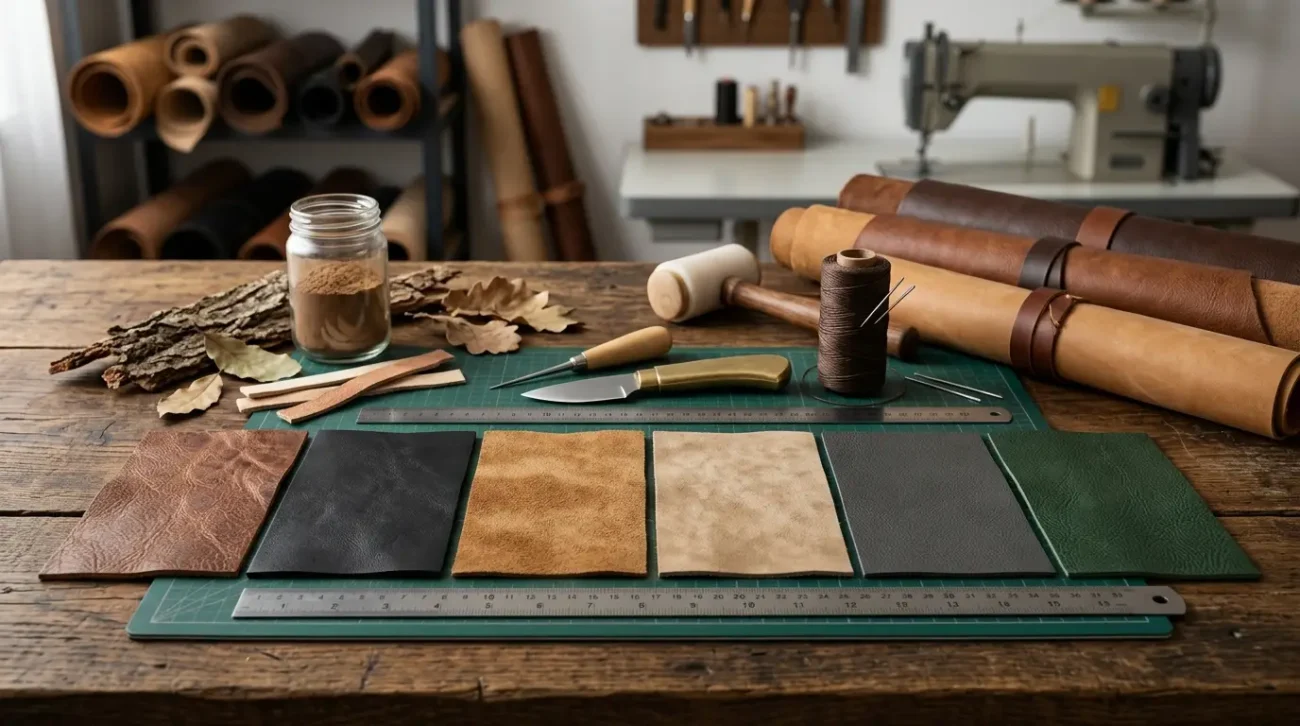
Leather is made from the treated skins and hides of animals, most commonly from cattle (cowhide), but it can also be sourced from sheep, goats, and pigs. These hides are primarily a byproduct of the meat and dairy industries. The raw hides undergo a preservation process called tanning, in which the skin is treated with chromium salts or natural agents such as tannins extracted from tree bark, to stabilize the collagen protein structure and prevent decomposition. The type of leather produced depends on the source animal, which layer of the hide is used, and the processing method applied. Full-grain leather is the highest quality grade, retaining the entire outer grain layer and developing a natural patina over time. Bonded leather is the lowest grade, containing only 10 to 20 percent actual leather scraps bound together with polyurethane. Non-animal alternatives include PU leather (polyurethane leather), faux leather, and plant-based materials such as mycelium (mushroom leather), Pinatex (pineapple leaf cellulose fibers mixed with PLA resin), Desserto (cactus leather from nopal), and apple waste leather. This complete guide answers every question about what leather is made of, how it is produced, every grade and type explained, and which is best for leather jackets.
What Is Leather Made Of?
Leather is made from animal skin. The raw material is the hide or skin of an animal, which consists of three distinct layers: the epidermis (the thin outermost surface layer, removed during processing), the dermis or corium (the thick middle layer composed primarily of collagen protein fibers, which becomes the leather), and the subcutaneous layer (the fatty inner layer, also removed during processing). The dermis is the layer that matters in leather production. It is a dense, three-dimensional network of interwoven collagen protein fibers that gives leather its characteristic strength, flexibility, and durability. Tanning stabilizes these collagen fibers to prevent decomposition and transform the raw hide into a stable, usable material.
Cowhide accounts for approximately 65 percent of all leather produced globally, making cattle the dominant source animal for the leather industry. Sheep and lamb account for around 15 percent of global production. Pigs and goats together account for roughly 11 percent. The leading producers of leather globally are China and India, with China manufacturing approximately 80 percent of the world’s leather products. Kanpur in India is known internationally as the Leather City of the World due to its concentration of tanneries and leather manufacturing facilities. For a deeper look at how leather became the foundation of jacket culture, read the history of leather jackets at J4Jackets. The full scientific context for leather production is also documented on the Wikipedia leather page.
Leather making has been practiced for more than 7,000 years. The process involves four fundamental stages: the preparatory stage in which the hide is soaked, cleaned, and de-haired; the tanning stage in which the collagen proteins are stabilized; the crusting stage in which the leather is thinned, dried, and lubricated; and the finishing stage in which the surface is oiled, buffed, dyed, embossed, or coated depending on the grade and intended use.
How Animal Hides Are Turned Into Leather: The Tanning Process
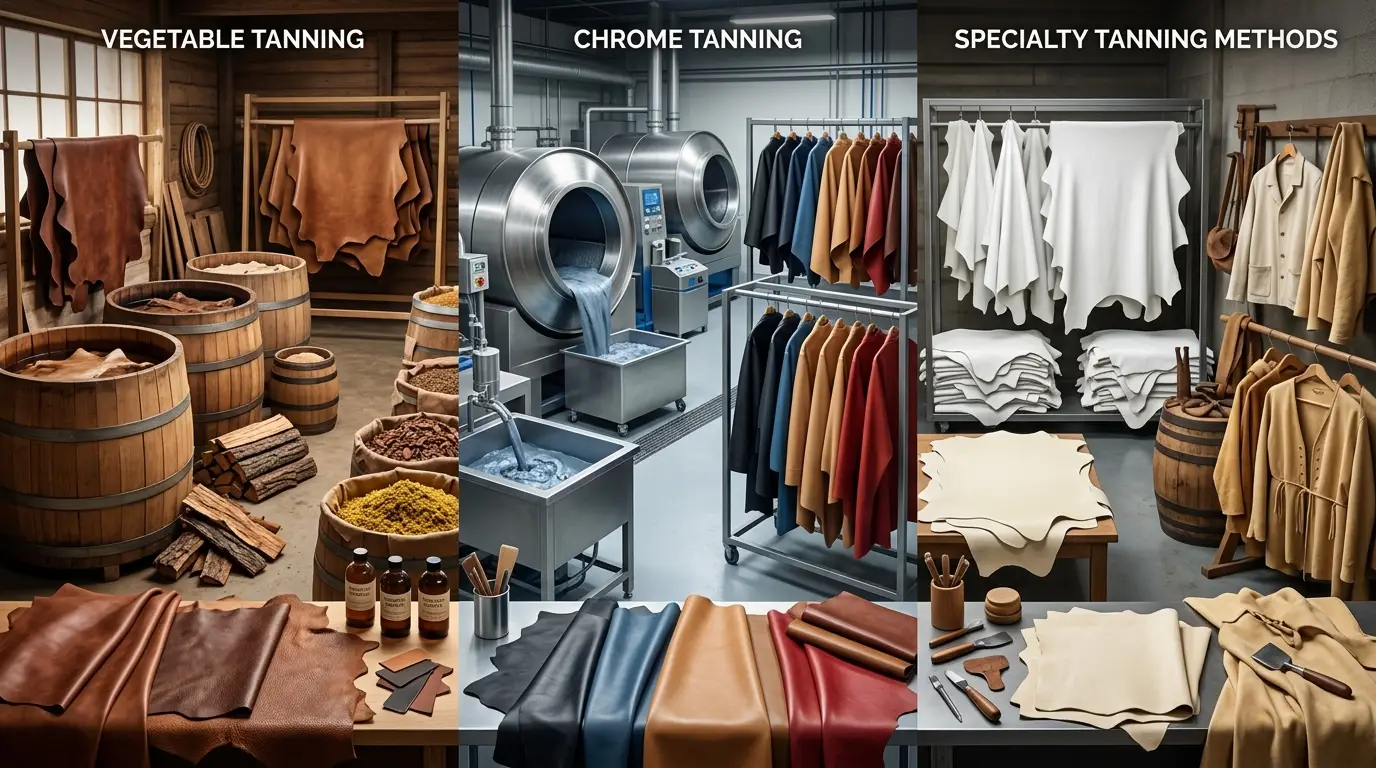
Tanning is the chemical process that stabilizes the protein structure of the raw animal hide to make it suitable for use as leather. Without tanning, raw hides dry into a hard, inflexible material called rawhide and putrefy when rewetted. The word tanning comes from the Latin tannum, referring to crushed oak bark, one of the earliest tanning agents used by humans. There are five primary tanning methods, each producing leather with distinct properties, durability characteristics, and environmental profiles.
Chrome Tanning: The Most Common Modern Method
Chrome tanning is the most common modern tanning method, used to produce approximately 80 to 90 percent of all leather made today. It uses chromium sulfate and other chromium salts and takes approximately one day to complete, making it ideal for large-scale industrial production. Chrome tanning produces leather that is soft, pliable, consistent in color, and highly durable. Its speed and low cost make it the dominant method globally. Chrome-tanned leather is the material used in the vast majority of fashion leather jackets, bags, and footwear available at retail price points.
Vegetable Tanning: The Oldest Known Method
Vegetable tanning is the oldest known tanning method and uses tannins extracted from the bark of trees including oak, chestnut, and mimosa. Unlike chrome tanning, which takes a single day, vegetable tanning takes weeks to months to complete. The result is leather that is stiff when new but becomes supple and develops a rich patina over time. Vegetable-tanned leather is not water-stable in the same way as chrome-tanned leather but is highly prized in premium leather goods, belts, holsters, and traditional leather accessories for its natural character, environmental profile, and the distinctive way it ages with use.
Aldehyde, Brain, and Alum Tanning: Specialist Methods
Aldehyde tanning produces what is called wet white leather, a chrome-free variant used in infant shoes, automotive leather, and applications where chemical restrictions apply. Brain tanning uses emulsified animal oils and produces exceptionally soft, washable leather historically associated with buckskin, a traditional material with a long history in North American craftsmanship. Alum tawing uses aluminium salts and is technically not true tanning because the leather reverts to rawhide if fully soaked in water, but it produces a very white, supple material historically used in bookbinding and glovemaking.
Leather Types Explained: Real, PU, Faux, Bonded, Nubuck, and Bicast
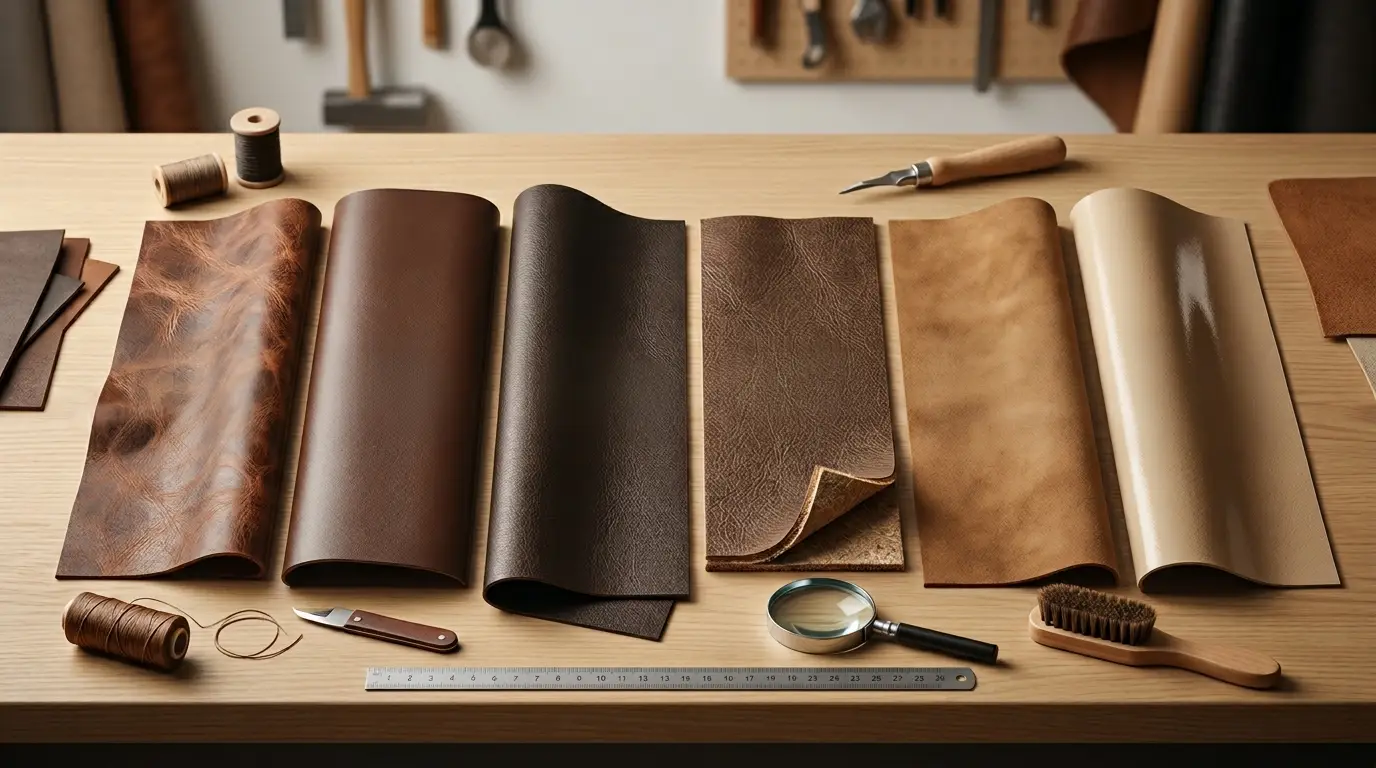
There are two main categories of leather. The first is traditional animal leather: genuine real leather derived from animal hides through tanning. The second is synthetic and plant-based vegan leather: materials designed to replicate real leather without using animal products. Within each category, multiple types exist with distinct properties, price points, and practical applications for jackets, furniture, accessories, and footwear.
What Is PU Leather?
PU leather, or polyurethane leather, is a fully synthetic material made by coating a fabric base such as cotton or polyester with a flexible polyurethane polymer finish designed to look and feel like genuine animal leather. It contains no animal material and is considered a cruelty-free and vegan-friendly alternative to real leather. PU leather is the most common synthetic material in affordable fashion leather jackets and accessories globally and is widely used across the mid and budget price range in outerwear.
The primary advantages of PU leather are its low cost, water and stain resistance, uniform appearance without natural blemishes, and availability in a wide range of colors and finishes. Its primary disadvantages are reduced durability compared to real leather, as it is prone to cracking, peeling, and delaminating over time, and poor breathability as the plastic coating traps heat and moisture against the skin. It is also a petroleum-derived product. For a detailed comparison of how PU leather performs against real leather specifically in jacket form, read the real leather vs vegan leather jackets guide at J4Jackets.
Care for PU leather: wipe with a damp cloth and mild soap, avoid harsh detergents, acetone, or oil-based conditioners as these degrade the polyurethane coating. Do not apply real leather conditioner to PU leather products.
What Is Faux Leather?
Faux leather is a broad term for any synthetic material designed to replicate the appearance and texture of real animal leather without using animal skin. PU leather (polyurethane) is the most common type of faux leather and the two terms are often used interchangeably in retail and fashion contexts. However, faux leather also encompasses PVC leather and a growing range of plant-based alternatives.
PVC (polyvinyl chloride) leather is more durable and water-resistant than PU leather but significantly less flexible, less breathable, and more rigid. The term vegan leather is used across all faux leather categories to indicate no animal product was used in production. Plant-based faux leathers include mycelium leather made from fungal root networks, Pinatex made from the cellulose fibers of pineapple leaves mixed with a PLA (polylactic acid) resin, apple waste leather made from leftover pomace and peels from the apple juice and cider industries, and Desserto cactus leather made from the fibrous pads of nopal cactus. Unlike PU or PVC, which rely on fossil fuel-derived polymers, these plant-based materials are fully or partially biodegradable.
What Is Bonded Leather?
Bonded leather, also called reconstituted leather, is a manufactured material made from shredded leather scraps and fibers glued together onto a paper or fiber backing and coated with polyurethane. It typically contains only 10 to 20 percent actual leather, making it the lowest grade of leather product on the market. The remaining 80 to 90 percent is paper backing, adhesive binders, and plastic coating.
Bonded leather initially looks visually appealing and uniform because the polyurethane surface coating gives it a clean, consistent finish that can superficially resemble genuine leather. However, it is significantly less durable than any grade of real leather. It cannot breathe like natural hide, is prone to surface cracking and scratching within a few years of use, and eventually peels away from its backing in sheets as the adhesive binders break down with heat and use. It is commonly found in low-priced furniture, book covers, wallets, journals, and budget fashion accessories. For regular use in jackets, furniture, or durable accessories, full-grain, top-grain, or even 100 percent PU leather are all more reliable long-term choices than bonded leather.
What Is Nubuck Leather?
Nubuck is top-grain leather that has been gently sanded or buffed on the outer grain side to create a soft, velvety texture with a slight nap of short protein fibers on the surface. Because nubuck uses the tough exterior grain of the hide, it is significantly more durable than suede, which is made from the softer inner flesh layer. Nubuck has a buttery, matte finish and develops a unique weathered patina over time that many leather enthusiasts consider more characterful than smooth leather finishes.
Nubuck is slightly more vulnerable to stains and water damage than smooth leather because its sanded open surface absorbs liquids more readily than a sealed grain surface. Care requires a specialist nubuck brush to restore the velvety texture and a waterproof protective spray designed specifically for nubuck and suede surfaces. Never use standard oil-based leather conditioner on nubuck as it darkens and flattens the velvety nap permanently.
What Is Bicast Leather? Bicast vs Bonded vs Split Leather Explained
Bicast leather, also called bycast leather, is a specific type of split leather that has been coated with a layer of polyurethane or vinyl to give it a smooth, high-gloss surface at a lower cost than genuine top-grain leather. It is made from the corium, the inner fibrous layer of the hide left once the top-grain has been separated, giving it an intact structural base that is more consistent than bonded leather.
The distinction between bicast leather, bonded leather, and split leather is important and frequently confused. Split leather is the raw inner hide layer before any coating is applied. Bicast leather is split leather with a polyurethane or vinyl surface coating applied on top. Bonded leather is an entirely different material made from shredded leather scraps and fibers compressed together with adhesive binders and then coated with polyurethane. Bicast leather has a more intact structural base than bonded leather, but both will peel and crack over time as the plastic coating separates from its backing. Patent leather, the high-gloss mirror-finish leather used in dress shoes, follows a similar coating principle applied to a higher-quality base leather.
Leather Grades Explained: From Full-Grain to Bonded
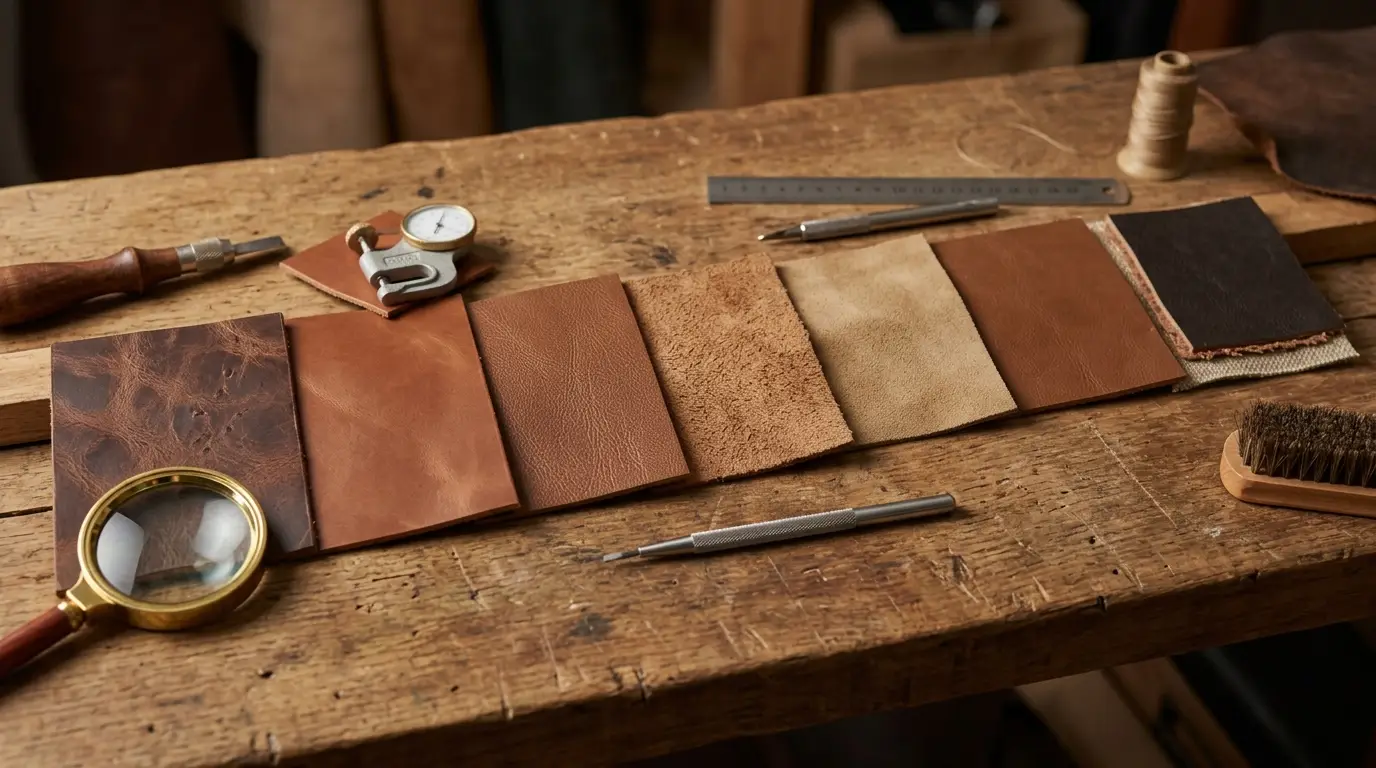
Leather grade refers to which layer of the hide was used and how much processing the surface received. From highest to lowest quality the grades are: full-grain, top-grain, corrected grain, split leather, suede, genuine leather, and bonded leather. Understanding leather grade is the single most important factor when buying any leather product, particularly leather jackets and furniture where durability over time is a primary requirement.
Full-Grain Leather: The Highest Quality Grade
Full-grain leather is made from the entire outer grain layer of the hide with nothing removed or buffed from the surface. It is the highest quality and most durable grade of leather available. The natural grain pattern of the animal hide remains completely intact, including any natural blemishes, scars, or variations that give each piece its individual character. Full-grain leather does not wear out over time in the way synthetic materials do. Instead, it develops a patina, a natural sheen acquired through age, skin oils, and regular use, that makes it more beautiful and distinctive the longer it is worn. Premium leather jackets, high-end furniture, and luxury accessories are made from full-grain leather. It is typically finished with a soluble aniline dye that allows the natural grain to remain fully visible.
Top-Grain Leather: The Most Common Grade in Fashion Jackets
Top-grain leather is made from the outer layer of the hide but with the very surface sanded or buffed to remove natural blemishes and create a more uniform appearance. The surface is then typically finished with a dye or pigment coat. Top-grain leather is thinner and more pliable than full-grain leather and is the most common grade used in mid-range leather goods and fashion jackets. It does not develop as rich a patina as full-grain leather because the natural grain has been altered, but it remains strong and durable. Corrected grain leather is a subcategory of top-grain in which the surface has been more extensively processed and embossed with an artificial grain pattern to achieve a completely uniform appearance, sacrificing natural character for visual consistency.
Split Leather and Suede
Split leather is made from the corium, the lower inner layer of the hide left once the top-grain has been separated. It is softer and more fibrous than top-grain leather and significantly less durable. Split leather is the basis for suede, bicast leather, and patent leather. Suede is split leather that has been buffed on the flesh side to create a soft, napped finish. It is lighter, more flexible, and softer against the skin than smooth grades, but considerably more vulnerable to staining and water damage, and requires specialist care to maintain its appearance.
Genuine Leather: Not a Quality Mark
Genuine leather is one of the most misunderstood terms in the leather industry. It sounds like a quality mark but it is actually one of the lowest grades of real animal leather. Genuine leather is typically made from the lower layers of split leather that remain after higher grades have been removed. The surface is heavily processed, sanded, and coated to create a uniform appearance. It is real animal leather but it is not high quality leather. Products labelled genuine leather will crack and peel over time far sooner than full-grain or top-grain leather, and should not be expected to provide the longevity of higher grade products.
Nubuck vs Suede: Side-by-Side Comparison
Nubuck and suede are frequently confused because both have a soft, velvety surface texture. The fundamental difference is which side and layer of the animal hide each comes from, which determines their durability, care requirements, and best applications.
| Feature | Nubuck | Suede |
|---|---|---|
| Hide source | Outer grain side, sanded | Inner flesh side of a split hide |
| Layer used | Top-grain layer | Split corium layer |
| Texture | Soft velvety nap, slightly firm | Very soft, more delicate fibrous nap |
| Durability | High — tough outer grain construction | Lower — softer inner layer |
| Water resistance | Moderate — open sanded surface absorbs | Low — highly absorbent |
| Care required | Nubuck brush and waterproof spray | Suede brush and waterproof spray |
| Best used for | Boots, jackets, furniture | Gloves, soft garments, casual footwear |
| Price | Higher — premium top-grain grade | Generally lower |
What Is Leather Bunching?
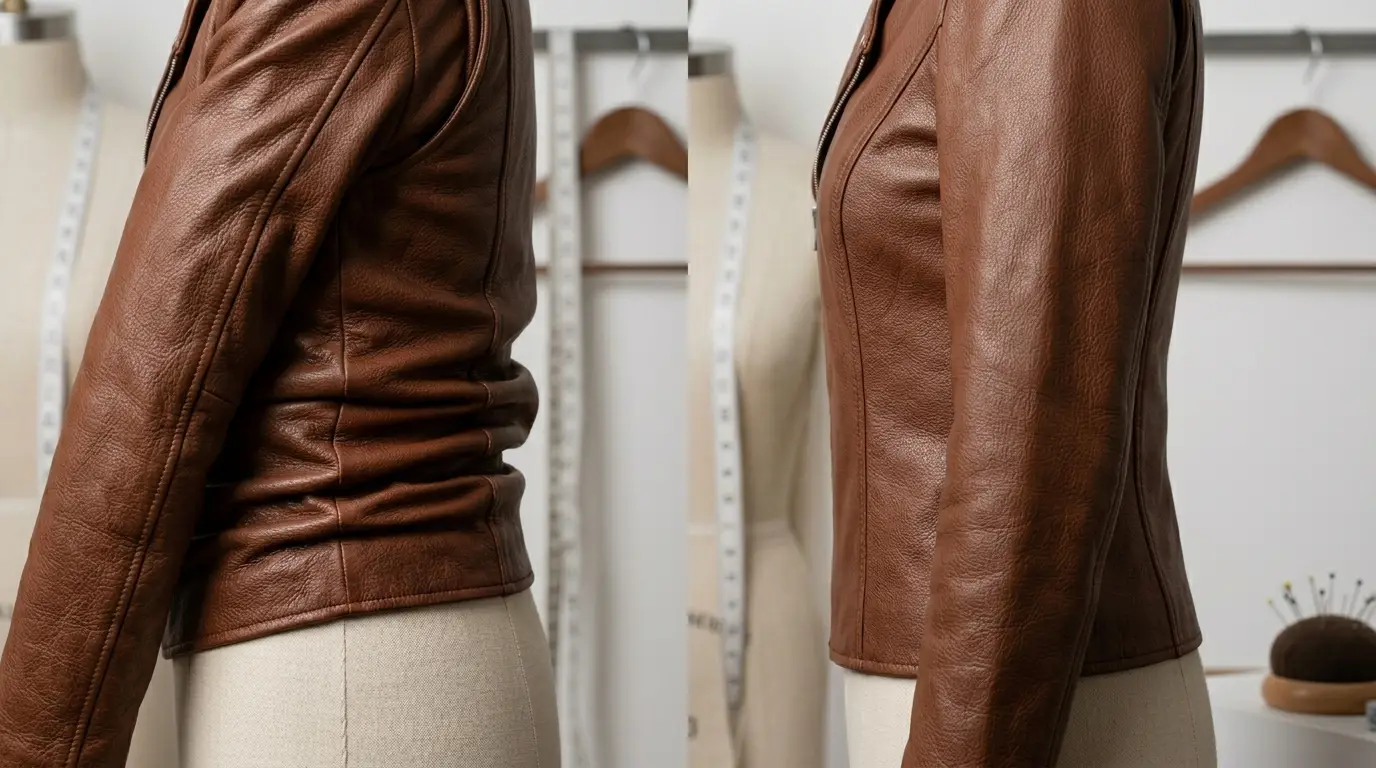
Leather bunching refers to the wrinkling, folding, or gathering of leather fabric at joints, seams, or areas of movement in a leather jacket or garment. It typically occurs at the elbows, underarms, and waist area where the leather folds as the wearer moves. Leather bunching is one of the most commonly searched concerns among leather jacket buyers, and understanding the difference between normal leather behavior and a genuine quality or fit issue is essential before making a purchase decision.
There are two causes of leather bunching, and distinguishing between them determines whether the jacket is a good fit or a poor purchase. The first is natural leather creasing. Real leather has memory and develops natural fold lines and flex points at movement areas over time. Subtle creasing at the elbows, underarms, and waist is not a defect. It is a normal, expected property of genuine leather and one of the signs that a jacket is made from real animal hide rather than synthetic material. A jacket with clean natural flex lines at movement points is behaving exactly as leather should.
The second cause is poor fit or insufficient leather quality. If a jacket bunches heavily across the back, gathers in thick excess folds at the waist, creates wide ridges of material rather than clean flex lines, or puckers across the shoulders, the cause is either an incorrect size or a leather grade that lacks the structural fiber density to hold its shape under repeated movement. Full-grain and top-grain leather have the dense collagen fiber networks that allow a jacket to hold structure and move cleanly. Lower grades including genuine leather and bonded leather lack this structural integrity and are far more prone to excessive gathering and bunching.
Leather does not stretch in the same way as woven fabrics. A jacket that bunches excessively on first wearing is unlikely to improve significantly over time. The correct approach is to size accurately before purchasing and to choose a leather grade with sufficient quality to maintain its silhouette. To explore leather jackets in styles and sizes that fit correctly, browse the Mens Leather Jacket and Womens Leather Jacket collections at J4Jackets.
Leather Grade Comparison: Which Type Should You Buy?
The right leather grade depends entirely on your budget, intended use, and how long you expect the product to last. Here is a direct comparison of all grades from highest to lowest quality:
| Leather Grade | Best For | Durability | Key Points |
|---|---|---|---|
| Full-Grain | Long-term investment | Highest, lasts decades | Develops patina, most expensive, best for premium jackets, bags, and furniture |
| Top-Grain | Mid-range fashion jackets | High, durable and affordable | Most common grade in quality fashion leather jackets, does not develop the same patina as full-grain |
| Corrected Grain | Uniform appearance products | Moderate | Embossed artificial grain, used in furniture and accessories, good stain resistance |
| Split and Suede | Soft garments and accessories | Moderate to low | Softer feel, less durable, needs specialist care, not ideal for heavy-wear outerwear |
| Genuine Leather | Budget fashion only | Low | Real leather but heavily processed, will crack sooner than higher grades |
| Bonded Leather | Avoid for regular use | Very low | Only 10 to 20 percent leather content, peels and cracks, not suitable for jackets or furniture |
| PU and Faux Leather | Sustainability and budget | Moderate, varies by quality | Cruelty-free, affordable, water-resistant, prone to peeling over time, no patina development |
Which Leather Is Best for Leather Jackets?
For leather jackets specifically, the best grade depends on how you intend to wear and maintain the jacket over time. Full-grain leather is the strongest investment for a jacket that will be worn frequently and kept for years or decades. It holds its shape under repeated movement, develops a patina that makes it more characterful with every wear, and resists abrasion far better than any other grade. The cost is higher, but a full-grain leather jacket is a long-term purchase rather than one that needs replacing within a few years.
Top-grain leather is the most practical choice for the majority of leather jacket buyers. It offers genuine durability and a quality finish at a more accessible price point than full-grain. The majority of quality mid-range leather jackets at J4Jackets use top-grain leather and will last many years with proper care. For a selection of the jacket styles that work best across all leather grades and budgets, read the 10 timeless leather jacket styles guide at J4Jackets.
PU and high-quality vegan leather jackets are a strong choice for buyers who prioritize sustainability, animal welfare, or budget. Premium PU leather has improved significantly in quality in recent years and a well-constructed PU jacket will perform acceptably for several years of regular wear. The key is to choose PU of sufficient thickness and construction quality. Avoid the cheapest end of the market where delamination is a near-certain outcome within one to two years. Avoid bonded leather jackets entirely. The 10 to 20 percent leather content gives the impression of a leather product but the peeling and cracking that follow make them poor value at any price.
Animals Used to Make Leather
Traditional leather is produced from the hides of many different animals, each offering distinct properties based on the structure of the animal’s skin, the density of the collagen fibers, and the natural thickness and surface character of the hide.
| Animal | Share of Production | Key Properties | Common Uses |
|---|---|---|---|
| Cattle (Cowhide) | Approximately 65% | Thick, strong, durable bovine collagen | Jackets, boots, bags, furniture |
| Sheep and Lamb | Approximately 15% | Soft, lightweight, fine grain | High-end garments, gloves, linings |
| Pig and Goat | Approximately 11% | Breathable, fine-grained, durable | Linings, gloves, bookbinding, sporting goods |
| Kangaroo | Less than 1% | Exceptional tensile strength, very lightweight | Motorcycle leathers, soccer boot uppers |
| Crocodile and Alligator | Less than 1% | Distinctive scale pattern, luxury status | High-end bags, belts, accessories |
| Ostrich | Less than 1% | Quill follicle bumps, soft, highly durable | Luxury handbags and accessories |
| Stingray | Less than 1% | Pebbly criss-crossed fiber surface, extreme durability | Wallets and belts, primarily Southeast Asia |
Shell Cordovan: The Most Expensive Non-Exotic Leather
Shell cordovan is a horse leather made not from the outer skin of the animal but from a specific flat membrane found beneath the fat layer on the rump of equine animals, called the shell. Only a very small amount of this membrane is recoverable per horse, making natural scarcity a defining characteristic of the material. The tanning and hand-finishing process for shell cordovan takes a minimum of six months to complete and is done entirely by hand. The result is a leather with a mirror-like finish, exceptional resistance to stretching and scratching, and a lifespan measured in decades rather than years. Small accessories made from shell cordovan command significant premiums in the leather goods market, making it the most expensive non-exotic leather available by square foot.
How to Tell If Leather Is Real
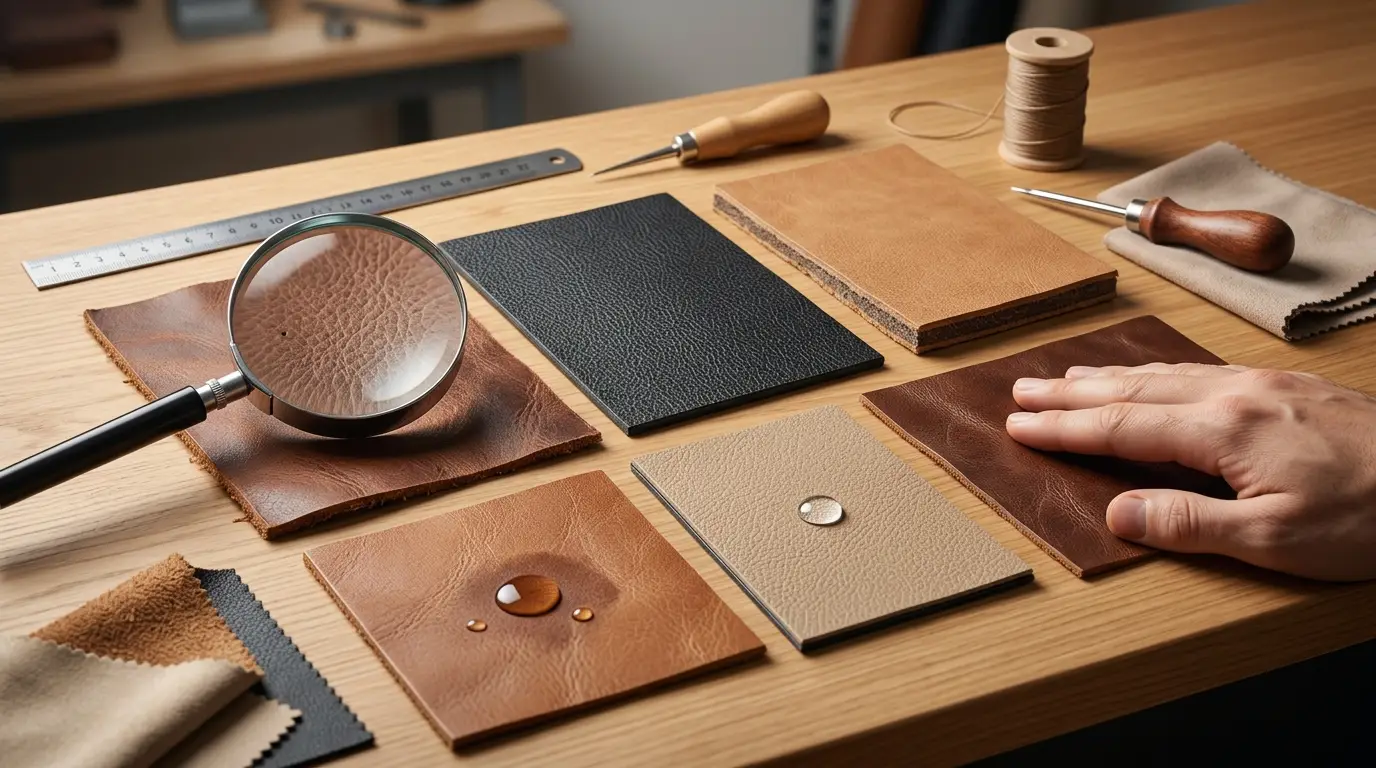
Knowing whether a leather product is genuine is a practical skill for any buyer. Several reliable tests can help you identify real leather from synthetic and bonded alternatives before purchasing.
Test 1: The Surface Texture Test
Real leather has natural variations in grain pattern, subtle blemishes, and an irregular texture that no two pieces share identically. Synthetic leather has a perfectly uniform, machine-made repeated pattern across the entire surface with no natural variation. This test is the most immediately visible difference and the fastest way to distinguish real from synthetic at a glance.
Test 2: The Edge Test
The edge test is highly reliable. Real leather has a rough, fibrous edge when cut or at seams, similar in appearance to the edge of thick fabric. Faux leather and bonded leather show a clean, plastic-like edge or a visible layered structure where the polyurethane coating separates cleanly from the backing material.
Test 3: The Smell Test
Real leather has a distinctive, organic, slightly animal smell that is difficult to replicate synthetically. PU and PVC leather smell of plastic or chemicals, particularly when new. The smell of real leather becomes more subtle over time with use and conditioning but never fully disappears.
Test 4: The Water Absorption Test
A small drop of water placed on real leather is absorbed slowly into the surface over several seconds, darkening the area slightly before drying. On PU or PVC leather the water beads and sits on the surface without absorbing because the plastic coating repels moisture completely.
Test 5: The Heat Test
Holding a fingertip firmly on real leather for a few seconds warms it and the leather retains that warmth. Synthetic leather does not warm and conduct heat in the same way. Do not apply direct flame or extreme heat to test leather as this will permanently damage any material.
How Leather Is Made: Step by Step
Understanding how leather is made provides essential context for why different grades and types perform differently in use, how they age, and what care they require. The process from raw animal hide to finished leather involves four main stages.
Step 1: Preparatory Stage. The hide is first preserved by salting or chilling immediately after slaughter to prevent decomposition during transport to the tannery. At the tannery it is soaked in water to rehydrate and clean it, then treated with lime and sodium sulfide in a process called liming to loosen and remove the hair and epidermis. After de-hairing, the hide is bated with enzymes to soften it and prepare the collagen structure for tanning.
Step 2: Tanning Stage. The prepared hide is immersed in the tanning agent, either a drum of chromium sulfate solution in chrome tanning or a series of progressively stronger tannin baths in vegetable tanning. The tanning agents bind to the collagen protein chains in the hide and prevent them from decomposing, giving the material its heat resistance, flexibility, and durability.
Step 3: Crusting Stage. The tanned leather is thinned to a consistent thickness, retanned with additional agents to achieve specific properties, dyed with color agents, and fat-liquored with oils and fats to lubricate the collagen fibers and give the leather its flexibility and softness. The leather is then dried and set.
Step 4: Finishing Stage. For full-grain leather this may be as simple as a light aniline dye that allows the natural surface to show through. For corrected grain and top-grain leathers it involves buffing, sanding, applying a pigment coat, and sometimes embossing with an artificial grain pattern. High-gloss finishes for patent leather are applied at this stage. The finished leather is then graded, measured, and prepared for cutting and manufacture.
Leather Alternatives: Vegan, Plant-Based, and Lab-Grown
The leather alternatives market has grown significantly as demand for cruelty-free and sustainable materials has increased. Alternatives divide into two main groups: synthetic petroleum-derived alternatives and plant-based or biotechnology-derived alternatives.
PU Leather and PVC Leather: Most Widely Available
PU leather and PVC leather are the most widely produced and commercially available alternatives to animal leather. PU leather is softer and more flexible than PVC and is the standard material in vegan fashion leather jackets and accessories. PVC is more durable and water-resistant but less breathable and more rigid. Neither is biodegradable, both being derived from fossil fuel-based polymers.
Mycelium Leather: Biodegradable Fungi-Based Alternative
Mycelium leather is made from the root network of fungi, which is grown to specific thicknesses and textures and then processed into a flexible, leather-like sheet. It is fully biodegradable and can be produced without the land and water footprint of cattle farming. Bolt Threads and Ecovative are among the companies developing mycelium leather at commercial scale for fashion and accessories.
Pinatex: Leather from Pineapple Leaf Fibers and PLA Resin
Pinatex is made from the cellulose fibers of pineapple leaves mixed with a PLA (polylactic acid) resin. It was developed by Dr Carmen Hijosa and is produced commercially by Ananas Anam. The use of pineapple leaf fiber, which is an agricultural byproduct of pineapple farming that would otherwise go to waste, makes it a low-waste material with a natural, slightly textured surface that has been used in fashion collections and footwear collaborations by major brands.
Desserto: Cactus Leather from Nopal
Desserto is cactus leather made from the fibrous pads of mature nopal cactus. It was developed by Adrian Lopez Velarde and Marte Cazarez and requires no irrigation or pesticides to produce. Desserto has a leather-like texture and has been adopted in a growing number of fashion, accessories, and automotive applications. It is partially biodegradable, with the cactus fiber component fully breaking down, though the base fabric element may not fully decompose.
Apple Waste Leather and Lab-Grown Leather
Apple waste leather is made from the leftover pomace and peels from the apple juice and cider industries, creating a smooth surface material with properties similar to top-grain leather at a lower environmental cost. Lab-grown leather, also called cultured leather or biofabricated leather, is produced by culturing animal cells in a laboratory environment to grow leather without slaughtering animals. It uses the same collagen proteins as conventional leather and represents the most structurally accurate alternative currently in development, though it remains an emerging technology not yet available at commercial scale.
Environmental Impact of Leather Production

Leather production carries significant environmental impact across three main areas that any informed buyer should understand before making decisions about leather versus alternatives.
The carbon footprint of bovine leather ranges from 65 to 150 kilograms of CO2 equivalent per square meter of production. The majority of this footprint comes from cattle rearing itself rather than the tanning process, as cattle farming generates methane emissions and requires large areas of land and water for grazing and feed production. This makes bovine leather one of the most carbon-intensive materials in fashion and furnishings when measured on a production basis.
The water footprint is substantial. Processing one ton of raw hide generates between 20 and 80 cubic meters of wastewater containing chromium at levels of 100 to 400 milligrams per liter and sulfide at levels of 200 to 800 milligrams per liter alongside significant pathogen contamination. Tanneries in countries with less stringent environmental regulation, including some facilities in Kanpur, India, have been associated with serious water pollution in surrounding communities.
Leather biodegrades slowly, taking between 25 and 40 years to decompose depending on the tanning method applied. Chrome-tanned leather biodegrades more slowly than vegetable-tanned leather. For comparison, vinyl and petrochemical-derived synthetic leathers take 500 or more years to decompose, meaning that while real leather has a higher production carbon footprint it has a significantly lower end-of-life environmental footprint than PVC alternatives.
Leather Care and Longevity
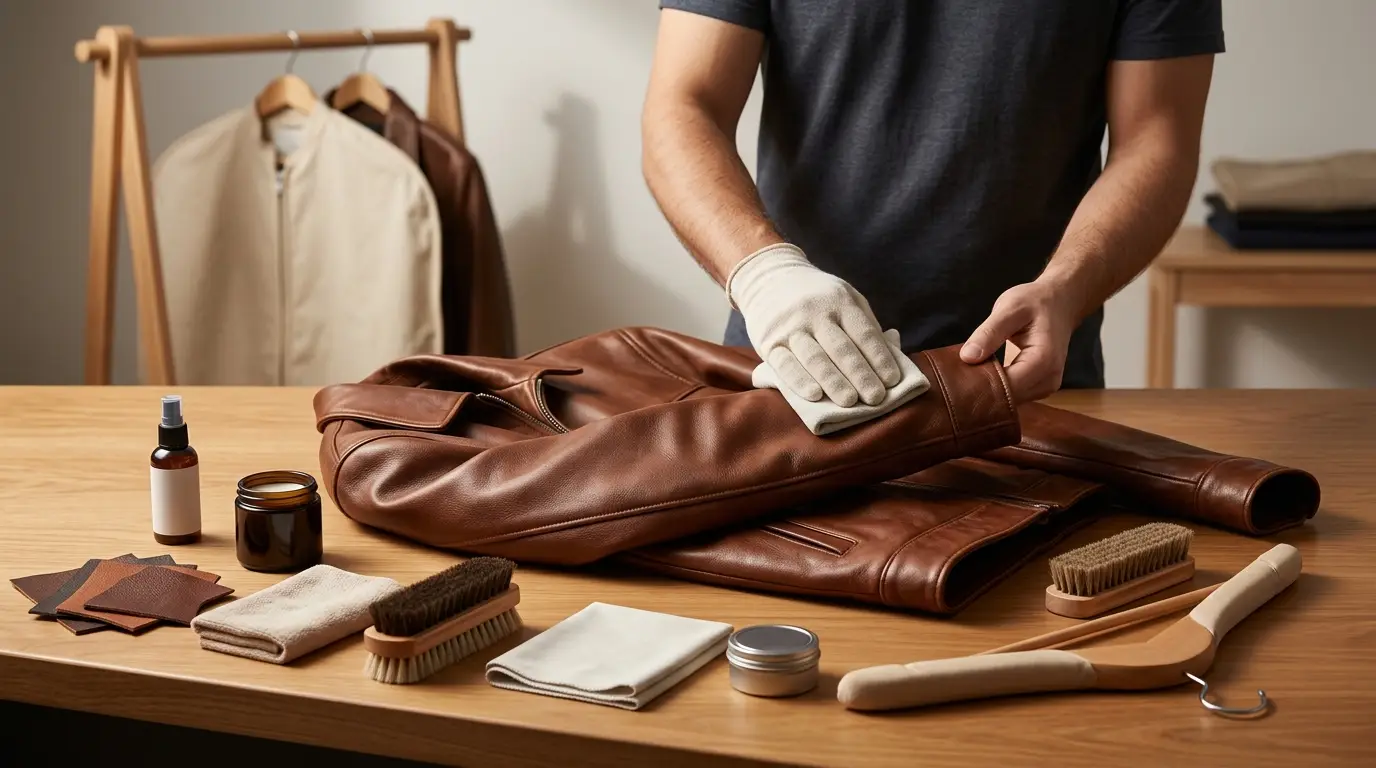
Understanding what leather is made of directly informs how to care for it. The collagen fiber structure of real leather requires moisture to remain flexible and strong. Without regular conditioning, the collagen dries out and the leather becomes brittle and eventually cracks. This is the fundamental reason why leather care is not optional for any jacket, bag, or piece of furniture you want to keep in good condition for years.
Clean leather regularly with a soft damp cloth to remove surface dust and body oils. Use a dedicated leather cleaner for deeper cleaning rather than household detergents, which strip the natural oils from the leather surface and accelerate drying and cracking. After cleaning, apply a leather conditioner to replenish the oils and maintain the flexibility of the collagen fibers. For full-grain and top-grain leather jackets, conditioning two to four times per year is sufficient for most climates. For a complete approach to protecting your leather jacket from rain and moisture damage, read the how to protect leather from water damage guide. For cleaning guidance, read the how to clean a leather jacket at home guide at J4Jackets.
Store leather jackets on wide, padded hangers to maintain the shoulder shape. Never store leather in plastic bags as it needs to breathe. Keep leather out of direct sunlight for extended periods as UV exposure breaks down collagen fibers and fades the surface dye. For water exposure, allow leather to dry naturally at room temperature away from direct heat sources, then condition once dry. Different leather grades require different care: nubuck and suede need specialist brushing tools and waterproof sprays; patent leather should be wiped with a soft dry cloth only; PU and faux leather require only a damp cloth and mild soap and must not be conditioned with oil-based products as these degrade the polyurethane coating.
Whether you are investing in a full-grain leather jacket built to last decades or exploring premium vegan leather options, J4Jackets carries every grade and style across mens and womens collections. Browse the complete Mens Leather Jacket and Womens Leather Jacket collections to find the right leather jacket for your budget, intended use, and style.
Frequently Asked Questions
Leather is made from the treated skins and hides of animals, most commonly cattle (cowhide), which accounts for approximately 65 percent of global leather production, followed by sheep and lamb at around 15 percent, and pigs and goats at roughly 11 percent. These hides undergo a preservation process called tanning, in which the skin is treated with chromium salts or natural tannins extracted from tree bark, to stabilize the collagen protein structure and create a durable, flexible material. Non-animal alternatives include PU leather (polyurethane), faux leather, and plant-based options such as mycelium leather, Pinatex pineapple fiber leather, and Desserto cactus leather.
Full-grain leather is the highest quality leather available. It is made from the entire outer grain layer of the animal hide with nothing removed or buffed from the surface, retaining the natural grain pattern and all its original strength. Full-grain leather develops a rich patina over time that makes it more beautiful with wear, and it is the strongest and most durable grade available. It is used in premium leather jackets, high-end furniture, and luxury accessories, and outlasts lower grades by many years or decades.
No. PU leather is not real leather. PU leather (polyurethane leather) is a fully synthetic material made by coating a fabric base such as cotton or polyester with a flexible polyurethane polymer finish. It contains no animal material and is a cruelty-free and vegan-friendly alternative to real leather. It is significantly cheaper to produce than genuine leather and is water and stain resistant, but it is less durable than real leather and prone to cracking, peeling, and delaminating over time.
All genuine leather is real leather, but genuine leather is actually one of the lowest grades of real animal leather. The term genuine leather is not a quality mark. It refers to leather made from the lower layers of split leather that remain after higher grades have been removed, with a heavily processed and coated surface to create a uniform appearance. Genuine leather will crack and peel over time far sooner than full-grain or top-grain leather, which are the higher grades of real leather with far greater durability and longevity.
Bonded leather, also called reconstituted leather, is made from shredded leather scraps and fibers glued together onto a paper or fiber backing and coated with polyurethane. It typically contains only 10 to 20 percent actual leather, with the remaining 80 to 90 percent consisting of paper backing, adhesive binders, and plastic coating. It is the lowest grade of leather product on the market and is prone to cracking, peeling, and separating from its backing within a few years of use. It should be avoided for jackets, furniture, or any product where durability matters.
The fundamental difference between nubuck and suede is which side and layer of the animal hide they come from. Nubuck is top-grain leather that has been sanded on the outer grain side, making it significantly more durable because it uses the tough exterior of the hide. Suede is made from the inner flesh side of a split hide, making it softer and more delicate but considerably more vulnerable to staining and water damage. Both have a soft velvety texture, but nubuck is the more durable and more expensive of the two.
Leather bunching refers to the wrinkling, folding, or gathering of leather at joints, seams, or movement areas in a leather jacket or garment, typically at the elbows, underarms, and waist. Natural leather creasing at flex points is a normal property of real leather and not a defect. Excessive bunching, however, is caused by either an incorrect jacket size or low-quality leather that lacks the structural integrity to hold its shape across repeated movement. Leather does not stretch significantly over time, so a jacket that bunches excessively on first wear is unlikely to improve. Choosing the correct size and a sufficient leather grade are the most important factors in preventing problematic bunching.
The most commonly used animals for leather production are cattle (cowhide, approximately 65 percent of global production), sheep and lamb (approximately 15 percent), and pigs and goats (approximately 11 percent combined). Beyond standard livestock, kangaroo leather is used for motorcycle leathers and soccer boots due to its exceptional strength-to-weight ratio. Crocodile, alligator, python, and ostrich skins are used in luxury fashion goods. Shell cordovan, made from a specific membrane on the rump of horses, is the most expensive non-exotic leather available. Less than 1 percent of leather globally comes from exotic animals.
The environmental comparison between faux leather and real leather is complex. Real leather has a higher production carbon footprint, ranging from 65 to 150 kilograms of CO2 equivalent per square meter, driven primarily by cattle farming methane emissions. However, real leather biodegrades in 25 to 40 years, while PVC and synthetic faux leathers take 500 or more years to decompose. Plant-based faux leathers such as mycelium leather, Pinatex, and Desserto cactus leather are fully or partially biodegradable and carry the lowest overall environmental footprint among all leather alternatives, though they remain more expensive and less widely available.
Five reliable tests help identify real leather from synthetic alternatives. The surface texture test shows that real leather has natural grain variation and subtle blemishes while synthetic leather has a perfectly uniform repeated pattern. The edge test reveals a rough fibrous edge on real leather versus a clean plastic-like edge on faux leather. The smell test works because real leather has a distinctive organic animal smell while PU and PVC leather smell of plastic or chemicals. The water absorption test shows a small drop absorbing slowly into real leather while beading on synthetic surfaces. The heat test shows that real leather warms and retains heat when held, while synthetic leather does not.
