
Leather Types & Materials
What Is PU Leather? The Complete Guide to Polyurethane Leather
Jun
What Is PU Leather?
If you have ever shopped for a jacket, handbag, wallet, office chair, or sofa, chances are you have come across the term PU leather. It appears on thousands of fashion products and furniture listings, yet many buyers are still unsure about what it actually means.
PU leather is one of the most common leather alternatives used today.
According to the Artificial Leather resource on Wikipedia, synthetic leather materials such as PU leather are designed to mimic the appearance and texture of traditional leather while using alternative manufacturing methods.
It is designed to imitate the appearance and feel of genuine leather while offering a more affordable and accessible option for consumers. Because of its versatility, PU leather has become a major material in the fashion industry, especially for jackets, bags, shoes, and accessories.
As demand for vegan leather and synthetic leather alternatives continues to grow, understanding PU leather has become increasingly important. Whether you are buying a jacket, comparing materials, or simply researching different leather options, knowing how PU leather is made and how it performs can help you make better purchasing decisions.
Quick Answer
PU leather, short for polyurethane leather, is a synthetic material made by applying a polyurethane coating to a fabric base. It is designed to resemble genuine leather while remaining more affordable and easier to manufacture. PU leather is widely used in fashion, furniture, automotive interiors, and accessories because it offers a leather-like appearance without using animal hides.
Why Is PU Leather So Popular?
PU leather has gained enormous popularity over the last few decades because it offers a balance between appearance, affordability, and accessibility.
Many consumers want the classic look of leather without paying premium prices. Manufacturers also appreciate the consistency of PU leather because it can be produced in large quantities with uniform color, texture, and finish.
Unlike natural leather, which varies from hide to hide, PU leather can be manufactured with a consistent appearance. This allows fashion brands to create products that look similar across entire collections.
The rise of vegan leather has also contributed to PU leather’s popularity. Since it does not use animal hides, many buyers view it as an alternative to traditional leather products.
Today, PU leather can be found in:
- Jackets
- Handbags
- Wallets
- Shoes
- Belts
- Furniture
- Car interiors
- Travel accessories
- Office chairs
Its widespread use makes it one of the most recognizable synthetic materials in the modern fashion industry.
What Does PU Stand For?
The term PU stands for polyurethane.
Polyurethane is a type of polymer that can be manufactured into flexible or rigid forms depending on its intended use. In the case of PU leather, polyurethane is applied as a coating over a textile backing such as polyester or cotton.
This coating creates the leather-like surface that gives PU leather its characteristic appearance.
Because the polyurethane layer can be embossed, textured, colored, and finished in many different ways, manufacturers can create products that closely resemble genuine leather.
How Is PU Leather Made?
Understanding how PU leather is manufactured helps explain both its strengths and its limitations.
The production process usually begins with a fabric base. This base is often made from polyester, cotton, or a blend of synthetic fibers.
The fabric is then coated with polyurethane to create a smooth surface. Manufacturers can add grain patterns, textures, and finishes that mimic natural leather.
The process generally includes:
- Preparing the fabric base
- Applying polyurethane coatings
- Embossing leather-like textures
- Adding colors and finishes
- Applying protective top coatings
The result is a material that looks similar to leather while being easier and less expensive to produce.
This manufacturing flexibility is one reason PU leather appears in so many fashion and lifestyle products today.
PU Leather vs Genuine Leather
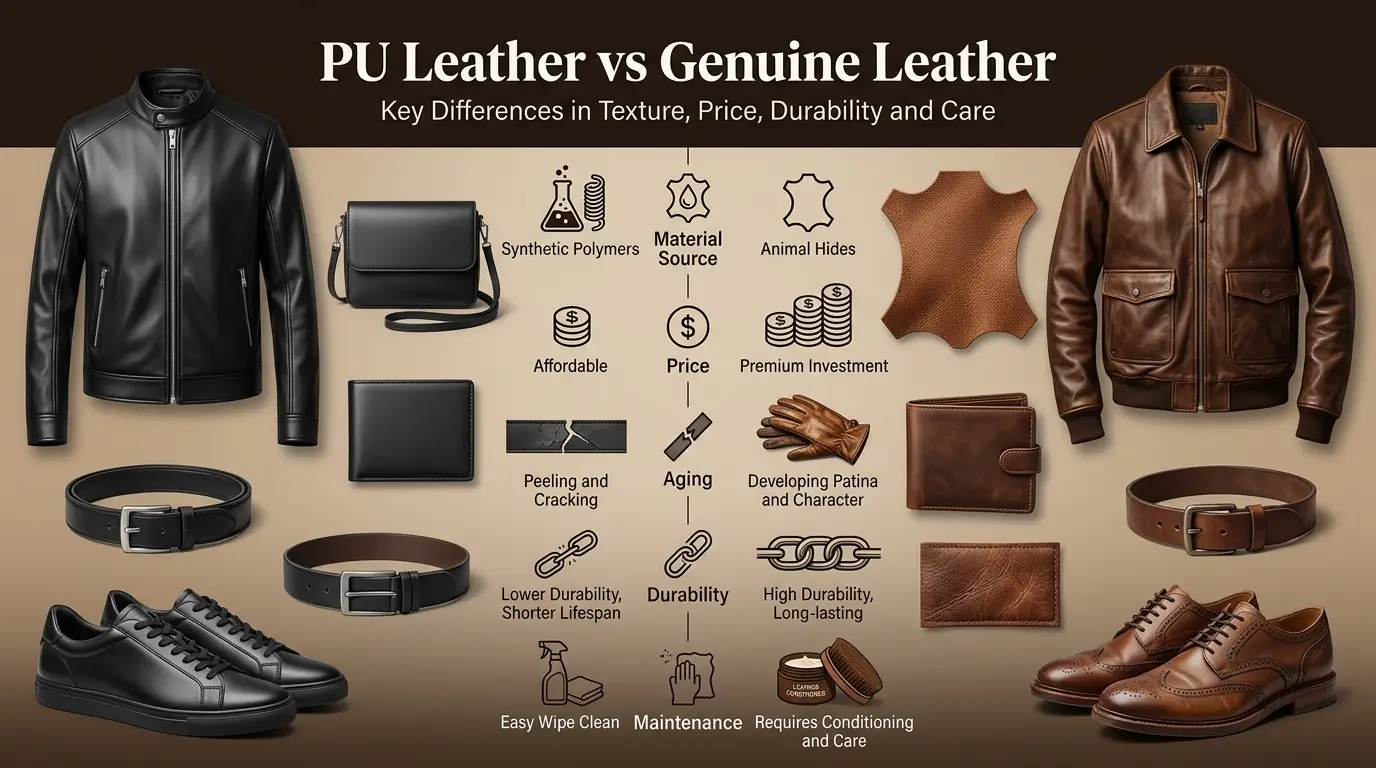
One of the most common questions buyers ask is whether PU leather is the same as genuine leather.
The answer is no.
A detailed comparison published by BTOD highlights differences in durability, texture, maintenance requirements, and long-term performance between PU leather and genuine leather.
Although PU leather can look similar to genuine leather, the two materials are fundamentally different.
Genuine leather comes from animal hides that have been processed through tanning and finishing methods. PU leather, on the other hand, is created using synthetic materials and polyurethane coatings.
Key differences include:
Material Source
Genuine leather originates from animal hides.
PU leather is made using synthetic materials and fabric backings.
Price
PU leather products are generally much more affordable.
Genuine leather products typically cost more due to material and manufacturing expenses.
Aging
Genuine leather often develops a unique patina over time.
PU leather tends to maintain its original appearance until signs of wear begin to appear.
Durability
High-quality genuine leather can last for decades.
PU leather generally has a shorter lifespan but can still provide years of use when properly maintained.
Maintenance
PU leather is easier to clean and often requires less maintenance.
Genuine leather usually benefits from regular conditioning and specialized care.
For readers interested in understanding how traditional leather is produced, our guide on What Is Leather Made Of provides a deeper look into the materials and processes behind genuine leather.
Is PU Leather the Same as Faux Leather?
This is another area that often causes confusion.
The terms PU leather and faux leather are closely related but not always identical.
Faux leather is a broad category that refers to any material designed to imitate genuine leather.
PU leather is one type of faux leather.
Other forms of faux leather may include:
- PVC leather
- Synthetic leather blends
- Plant-based leather alternatives
- Recycled leather alternatives
Because PU leather is so widely used, many people use the terms interchangeably. However, technically speaking, PU leather is simply one category within the broader faux leather market.
PU Leather vs PVC Leather
Another common comparison is PU leather versus PVC leather.
PVC leather, or polyvinyl chloride leather, is another synthetic leather material used in fashion, furniture, and commercial products. While both materials are designed to imitate leather, they differ in flexibility, comfort, and overall feel.
PU Leather
- Softer texture
- More flexible
- More breathable
- Often feels closer to genuine leather
- Commonly used in fashion products
PVC Leather
- More rigid structure
- Less breathable
- Often heavier
- Highly water-resistant
- Frequently used in commercial and industrial applications
Many fashion brands prefer PU leather because it typically offers a more natural appearance and improved comfort compared to PVC alternatives.
For jackets and apparel, PU leather is generally the more popular choice because it creates a softer and more wearable garment.
Is PU Leather Vegan Leather?
Yes, PU leather is widely classified as vegan leather because it does not use animal hides.
According to the Artificial Leather resource on Wikipedia, synthetic leather materials such as PU leather are designed to mimic the appearance and texture of traditional leather while using alternative manufacturing methods.
This is one of the main reasons it has become popular among buyers looking for alternatives to traditional leather products.
However, it is important to understand that “vegan leather” refers to the absence of animal-derived materials. It does not automatically indicate how sustainable or environmentally friendly a material may be.
Today, the vegan leather category includes:
- PU leather
- Plant-based leather alternatives
- Mushroom leather
- Cactus leather
- Pineapple leather
- Recycled leather alternatives
PU leather remains the most commonly available vegan leather option because it is affordable and easy to manufacture at scale.
What Are the Advantages of PU Leather?
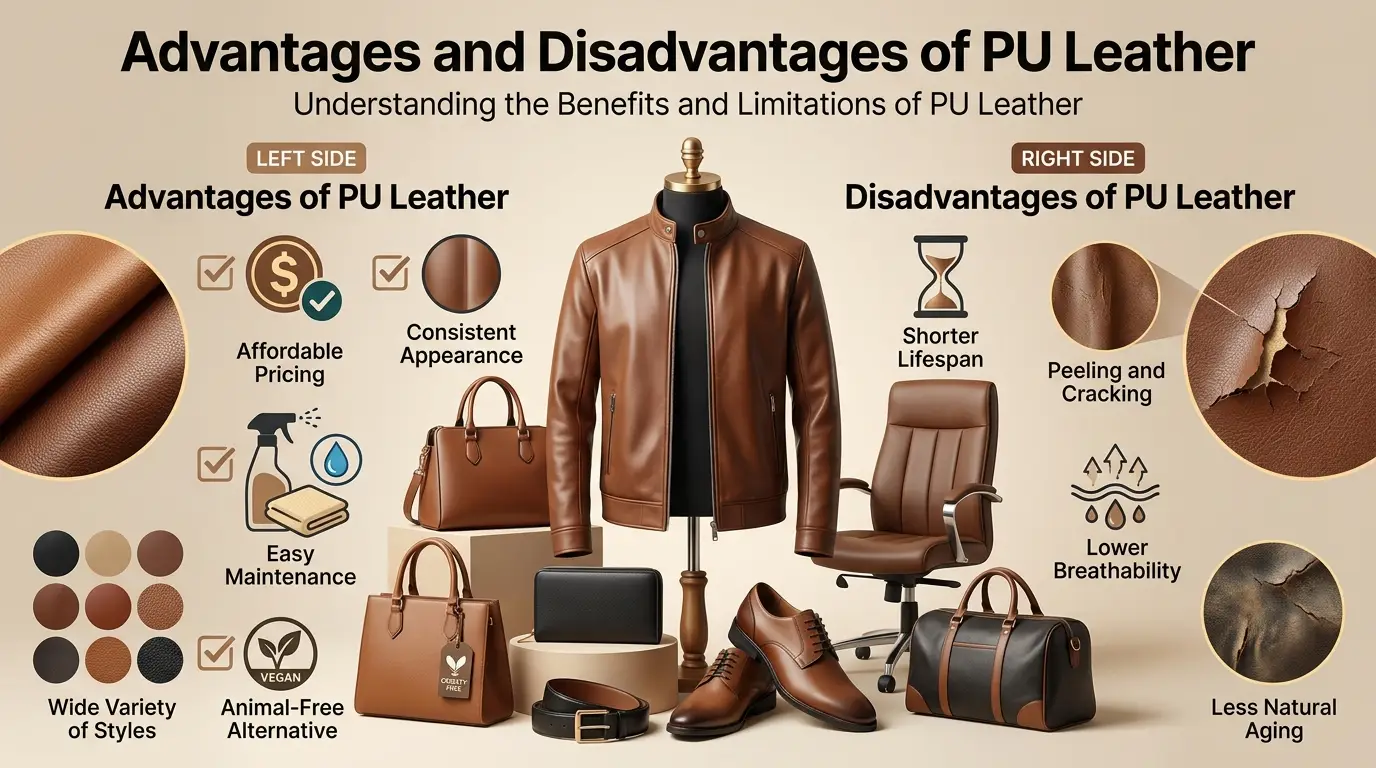
PU leather continues to dominate many product categories because it offers several practical benefits.
Affordable Pricing
One of the biggest reasons buyers choose PU leather is cost.
Products made from PU leather are often significantly more affordable than comparable genuine leather items, making leather-inspired fashion accessible to a wider audience.
Consistent Appearance
Natural leather can vary in grain, texture, and color.
PU leather provides a more uniform appearance, which allows manufacturers to maintain consistency across large collections.
Easy Maintenance
PU leather generally requires less maintenance than genuine leather.
Most products can be cleaned using a damp cloth and mild soap without requiring specialized leather conditioners.
Wide Variety of Styles
Manufacturers can produce PU leather in virtually any color, texture, or finish.
This flexibility makes it extremely popular in modern fashion.
Animal-Free Alternative
Because it does not use animal hides, PU leather remains one of the most widely available vegan leather materials.
What Are the Disadvantages of PU Leather?
Although PU leather has many benefits, it is not without limitations.
Shorter Lifespan
Compared to premium genuine leather, PU leather usually has a shorter lifespan.
Peeling and Cracking
Over time, the polyurethane surface may begin to peel, crack, or wear away.
This is one of the most common complaints associated with lower-quality PU leather products.
Lower Breathability
The synthetic coating reduces airflow, which can make PU leather less breathable than natural leather.
Less Natural Aging
Genuine leather often develops character and patina as it ages.
PU leather typically does not develop these natural aging characteristics.
According to analysis published by Von Baer, affordability and visual consistency remain two of the primary reasons buyers choose PU leather products over traditional leather alternatives.
Does PU Leather Peel?
Yes, PU leather can peel.
Peeling occurs when the polyurethane coating begins to break down due to age, environmental exposure, friction, or poor maintenance.
Several factors can increase the risk of peeling:
- Direct sunlight
- Excessive heat
- High humidity
- Poor storage conditions
- Frequent abrasion
- Low-quality manufacturing
Not all PU leather products peel at the same rate. Higher-quality materials and better care practices can significantly improve longevity.
Is PU Leather Waterproof?
PU leather is water-resistant but not completely waterproof.
The polyurethane coating helps repel small amounts of moisture, making PU leather suitable for everyday use in light rain or damp conditions.
However, prolonged exposure to water can eventually affect the material.
To maximize performance:
- Wipe away moisture quickly
- Avoid soaking the material
- Allow products to air dry naturally
- Avoid direct heat sources when drying
For jackets and fashion accessories, PU leather generally performs well under normal day-to-day conditions.
Is PU Leather Toxic?
This question appears frequently in search results and AI-generated answers.
Modern PU leather products manufactured according to industry standards are generally considered safe for everyday use.
However, manufacturing methods vary by region and producer. Like many synthetic materials, polyurethane-based products can involve chemicals during production.
For consumers, the most important factor is purchasing from reputable brands that prioritize quality materials and responsible manufacturing practices.
For everyday fashion products such as jackets, handbags, and accessories, PU leather is widely used throughout the global fashion industry.
How Long Does PU Leather Last?
The lifespan of PU leather depends on quality, usage, storage conditions, and maintenance.
On average, well-made PU leather products can last several years when properly cared for.
Factors affecting lifespan include:
Quality of Manufacturing
Higher-quality PU leather generally lasts longer.
Frequency of Use
Daily heavy use will naturally create more wear than occasional use.
Environmental Conditions
Excessive heat, humidity, and sunlight can accelerate deterioration.
Maintenance
Proper cleaning and storage can significantly extend product life.
While PU leather may not match the lifespan of premium genuine leather, many consumers find its balance of affordability and appearance worthwhile.
Why Is PU Leather Commonly Used in Jackets?
Fashion brands frequently use PU leather because it provides the appearance of leather while allowing greater flexibility in pricing and design.
PU leather jackets offer several advantages:
- Affordable price points
- Modern styling options
- Wide color availability
- Consistent finish
- Easy maintenance
- Lightweight construction
This makes PU leather particularly attractive for fashion-focused outerwear.
Buyers exploring leather-inspired styles can browse collections such as our Men Leather Jackets collection or discover modern styles through our Women Leather Jackets collection.
These collections showcase how leather-inspired outerwear continues to evolve across different fashion categories.
How to Care for PU Leather
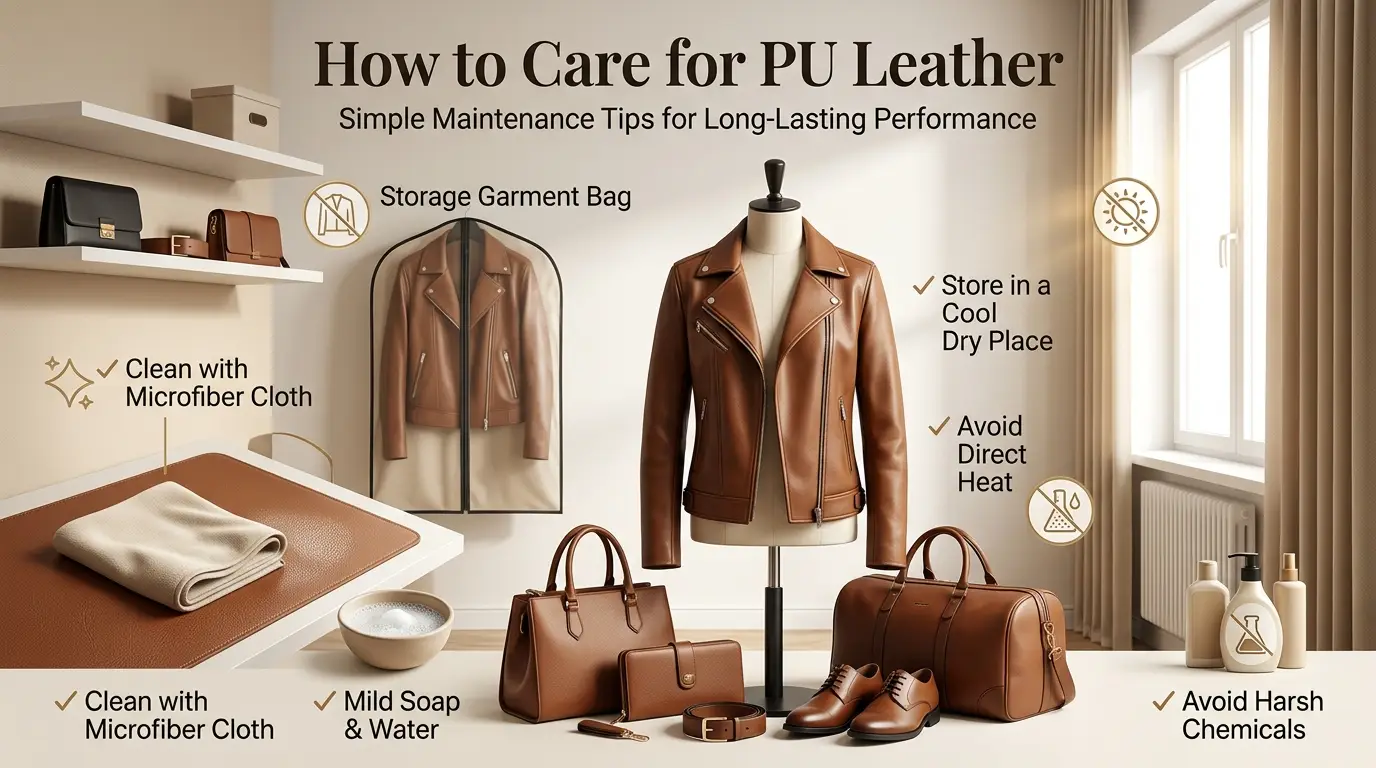
Proper care can help preserve appearance and extend lifespan.
Cleaning
Use a soft microfiber cloth to remove dust and dirt.
Spot Treatment
Use mild soap and water for small stains.
Storage
Store products in a cool, dry environment.
Avoid Heat
Keep PU leather away from radiators, heaters, and prolonged direct sunlight.
Avoid Harsh Chemicals
Strong solvents and abrasive cleaners may damage the polyurethane coating.
Simple maintenance habits can make a noticeable difference in long-term performance.
Environmental Impact of PU Leather
The environmental discussion surrounding PU leather is complex.
On one hand, PU leather does not require animal hides.
On the other hand, it remains a synthetic material that involves chemical manufacturing processes.
As sustainability becomes increasingly important within fashion, many companies are exploring new alternatives that combine durability, reduced environmental impact, and improved performance.
This is one reason why plant-based leather alternatives continue to receive growing attention.
Final Thoughts
PU leather has become one of the most widely used leather alternatives in the modern world. Its affordability, flexibility, and leather-like appearance have made it a popular choice across fashion, furniture, automotive interiors, and accessories.
While it differs significantly from genuine leather in terms of composition, aging, and long-term durability, PU leather remains an attractive option for buyers seeking a leather-inspired material at a more accessible price point.
Understanding what PU leather is, how it is made, its strengths, and its limitations can help consumers make informed purchasing decisions. Whether you are shopping for a jacket, comparing leather alternatives, or researching vegan leather materials, knowing the facts behind PU leather allows you to choose the option that best fits your needs.
To continue learning about leather materials and outerwear, visit J4 Jackets.
Frequently Asked Questions
PU leather is a synthetic material made by coating a fabric base with polyurethane to create a leather-like appearance and texture.
No. PU leather is an artificial leather material designed to imitate the look and feel of genuine leather.
Yes. PU leather is commonly marketed as vegan leather because it does not use animal hides.
With proper care, PU leather can last several years, although its lifespan is usually shorter than high-quality genuine leather.
PU leather is water-resistant and handles light moisture well, but prolonged exposure to water can still cause damage over time.
Over time, PU leather may crack or peel, especially if exposed to heat, sunlight, or poor maintenance.
Genuine leather comes from animal hides, while PU leather is a synthetic material made using polyurethane coatings.
Yes. PU leather is widely used for jackets because it offers a leather-like appearance, affordability, and easy maintenance.
PU leather can usually be cleaned with a soft cloth, mild soap, and water. Harsh chemicals should be avoided.
PU leather avoids animal products, but it is still a synthetic material. Its environmental impact depends on manufacturing methods and disposal practices.
